
Earthing & Lightning Protection Systems in Petrochemical & Hazardous Facilities
Static charge dissipation, Zone 0/1 hazardous area grounding, and IEC 60079 & IS 3043 compliance.
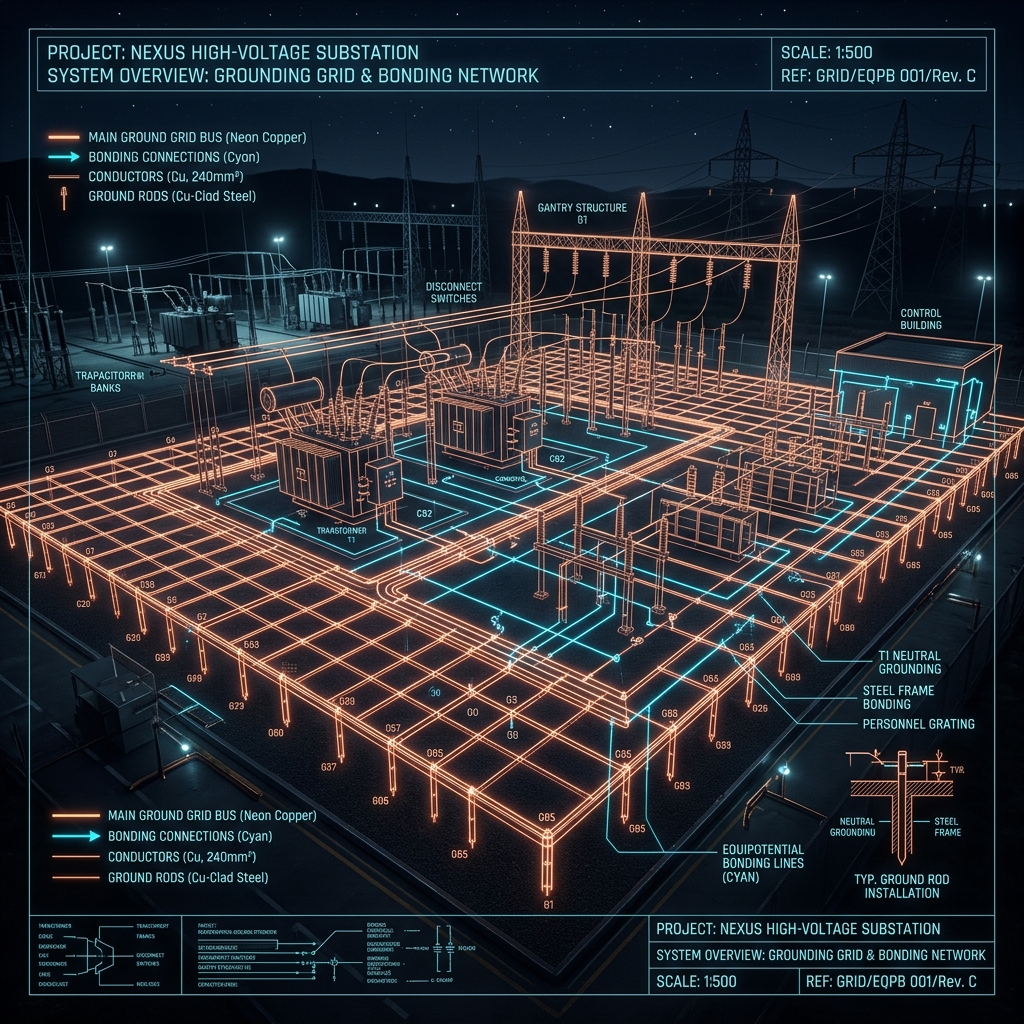
1. The Critical Nature of Grounding in Petrochemical & Refinery Plants
Petrochemical plants, oil refineries, and chemical storage facilities handle volatile hydrocarbons, flammable gases, and explosive dust atmospheres. In these hazardous locations, an electrical fault or a minuscule electrostatic discharge (less than 0.2 mJ) can ignite flammable vapors, resulting in catastrophic explosions.
Earthing systems in petrochemical facilities serve three distinct, critical functions:
2. Hazardous Area Classification & Grounding Standards
Grounding architectures must strictly comply with international ATEX / IECEx hazardous zone classifications:
| Hazardous Zone | Flammable Atmosphere Presence | Grounding & Bonding Mandate |
|---|---|---|
| Zone 0 | Continuous or long periods (Tank interiors) | Intrinsic safety grounding, continuous static discharge (<10 Ohms) |
| Zone 1 | Likely to occur during normal operation | Redundant equipotential bonding, certified exothermic joints |
| Zone 2 | Not likely, only brief abnormal periods | Standard structural earthing with anti-corrosive HDG / Copper conductors |
Governing International Codes:
3. Storage Tank & Pipeline Grounding Architecture
   [ Flammable Liquid Storage Tank ]
         │
         ├─── Flexible Copper Earth Jumper across Floating Roof Seal
         │
         ├─── Perimeter Earth Ring (50x6mm Copper / HDG GI Strip)
         │
         ├─── Dedicated Chemical Earthing Electrodes (Deep Boreholes)
         │
         └─── Exothermic Molecular Welds (Zero Spark Resistance)
A. Floating Roof Tank (FRT) Static Protection:
Storage tanks containing crude oil or volatile distillates require flexible stainless steel or tinned copper shunt conductors connecting the floating roof to the tank shell at regular intervals (not exceeding 3 meters perimeter spacing) to prevent static ignition during lightning or filling.
B. Pipeline Flange Jumper Bonding:
Pipeline gaskets often insulate pipe sections. To prevent electrostatic potential buildup during high-velocity fluid flow, all insulated pipe flanges must be bridged using copper earth bonding jumpers with serrated lock washers.
4. Exothermic Welding in Hazardous Environments
Mechanical bolted clamps in petrochemical plants corrode rapidly due to atmospheric sulfur dioxide (SO_2), hydrogen sulfide (H_2S), and saline humidity. Corroded clamps create high contact resistance and micro-arcing hazards.
Sprexo Exothermic Welding Systems provide permanent molecular copper bonding that:
5. Summary Checklist for Petrochemical Plant Engineers
Designing an Earthing or Lightning Protection System?
Connect with Sprexo International's senior electrical engineers for soil resistivity analysis, IEEE 80 / IS 3043 grid sizing, BOQ estimation, and turnkey project supply.
Related Technical Publications
 Earthing Engineering
Why Earthing Systems Are the Backbone of Electrical Safety: An Engineering Deep-Dive
 Materials & Specs
Types of Earthing Electrodes: A Practical Selection & Sizing Guide
 Electrical Safety